Hiring for winter: recruiting snow removal crews before the first storm
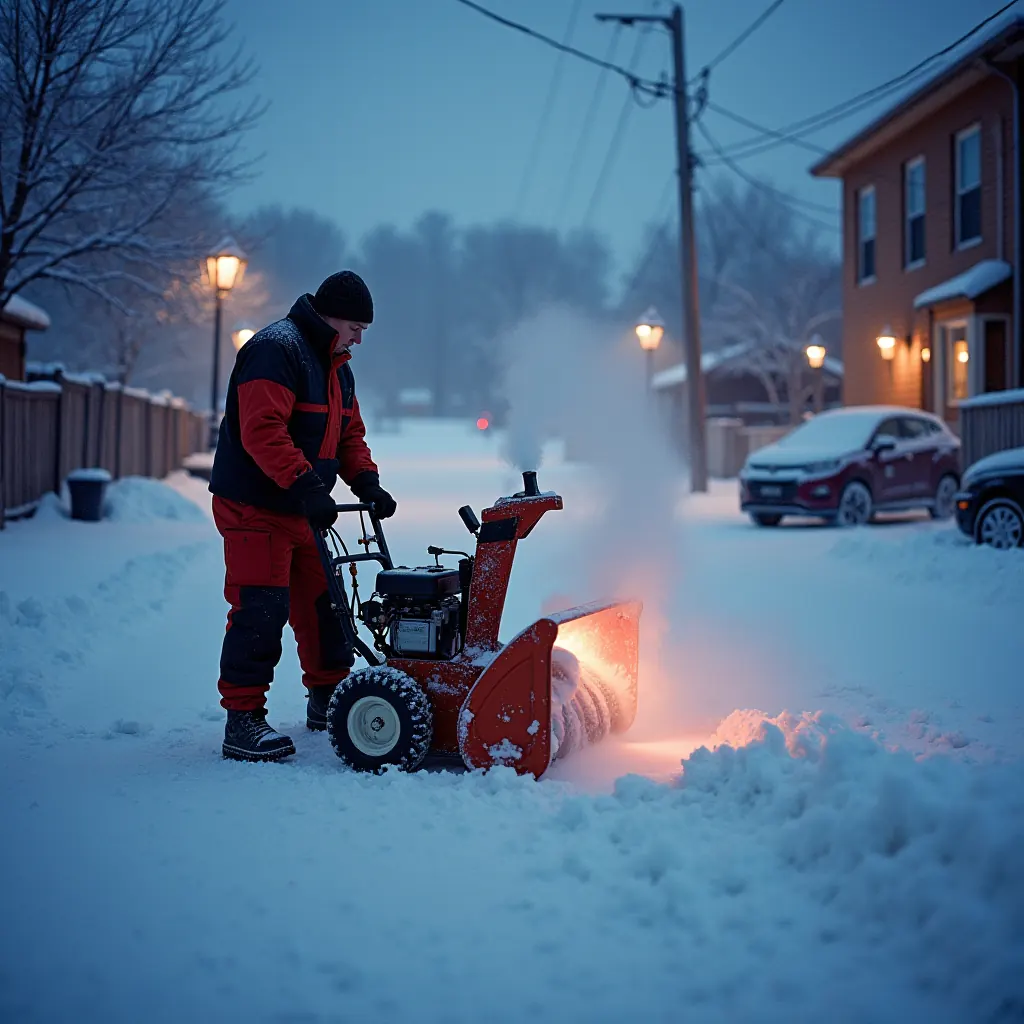
It's 3:40 a.m., snow has been falling since midnight and your phone rings. It's not a client: it's your loader operator telling you he won't be doing the winter. Good news: this scene is prevented in September, not at 3:40 a.m. Here's the timeline, the profiles and the conditions that keep a snow removal crew together until spring.
The right timeline: recruit while it's still sunny
The classic reflex is to post a job ad when the first flakes fall. Bad timing: by then, the good operators have already said yes to someone else, and the ones left haven't had time to test-drive your equipment. A snow removal season gets staffed at the end of summer.
| Period | To do |
|---|---|
| August | Call last winter's crew. Who's coming back? Who's hesitating, and why? |
| September | Post ads for the empty positions and for a small pool of backups. |
| October | Interviews, equipment trials, licence checks. |
| November | Training on routes and contracts, key handover, test of the call-out system. |
| December to March | Keep two or three backups ready and check in after every big storm. |
Reading this at the end of October with nothing done? Compress the timeline: call your former crew this week, post your ads at the same time, run equipment trials the following week. It's tight, but doable.
Do it today: list your winter positions (routes, machines, shifts) and write the name of the confirmed person next to each one. Every empty box is an ad to post.
The profiles to target (and where they hide)
A snow removal company doesn't hire "snow removal workers." It hires specific roles, and they don't call for the same licences or the same tolerance for sleepless nights.
- Plow truck driver: depending on the truck, a Class 5 licence is enough or Class 3 is required.
- Loader or snowblower tractor operator: experience on the machine, calm under pressure, comfortable in tight parking lots.
- Finishing labourer: shovel and walk-behind snowblower for steps, storefront entrances and fire hydrants. Often the hardest position to fill.
- Dispatcher or crew lead: watches the weather, triggers call-outs, takes client calls.
- On-call mechanic: a loader breaking down at 2 a.m. means a whole route running late.
Where do you find them? Think of people whose summer is busy and whose winter is quiet: landscapers, grounds maintenance workers, golf course or campground staff, farmers, active retirees who love driving. For the labour shortage in general, read Recruiting through a labour shortage: a guide for small service businesses.
Check licences before you hire. According to the Société de l'assurance automobile du Québec (SAAQ), a Class 5 licence lets you drive a 2-axle vehicle with a net mass under 4,500 kg, as well as a tool vehicle such as a loader or grader, unless it's mounted on a truck chassis. A 2-axle truck of 4,500 kg or more, or a truck with 3 or more axles, requires Class 3.
Do it today: for each position, write down the licence class the vehicle requires. That's what goes in the ad, in black and white.
Night availability: say it plainly, pay it properly
Snow removal runs on a schedule set by the sky. A plow operator who quits in January doesn't always quit because of the cold. Often it's the uncertainty: never knowing whether they'll be called in, or how waiting time will be paid. If your crew members are employees, here's what Québec's Act respecting labour standards provides:
- An employee who is at your disposal at the workplace and waiting to be given work is deemed to be at work. Waiting at the garage is paid time.
- If you call someone in and they work less than three consecutive hours, they're entitled, except in cases of superior force, to an indemnity equal to three hours of their regular hourly wage (some situations are excluded).
- Beyond 40 hours in the week, hours are paid at a 50% premium, or replaced by paid time off if the employee asks.
- An employee can refuse to work more than 2 hours beyond their usual daily hours, or more than 14 hours in a 24-hour period (12 hours if their schedule is variable or non-continuous). This right doesn't apply when public safety is in danger, when property is at risk of serious damage, or in other cases of superior force.
- The right to refuse work announced less than 5 days in advance doesn't apply when the nature of the job requires the employee to remain available. That's why the ad should state clearly that the position is on call.
Some exceptions exist depending on the sector or the position. For your specific situation, check with the CNESST. Beyond the law, what reassures a crew is a clear call-out system: how many centimetres trigger a call-out, who gets called first, with how much notice, and a fair rotation of the worst shifts.
Do it today: write your call-out system on one page (trigger, call order, target notice, how waiting time and call-ins are paid) and hand it to every candidate.
The ad that gets good operators to call back
An experienced operator reads a snow removal ad in ten seconds. They're looking for four things: the rate, the machine, the area and how nights are handled. If one is missing, they move on to the next ad.
Put in the ad:
- An exact hourly rate, not "based on experience."
- The machine, its approximate age, the heated cab.
- The area and the type of contracts: residential driveways, commercial lots, sidewalks.
- The call-out system and how waiting time is paid.
- The length of the season and the licence required.
Avoid: "dynamic, versatile person" with nothing concrete, a rate that barely clears the minimum for a night job on heavy equipment, and promised hours the weather can't guarantee.
On GPP Emploi, posting an ad is free and it stays online for 45 days. Every ad is checked automatically before it goes live, including for the minimum wage: $16.60 an hour in Québec since May 1, 2026. You choose between a "job offer," if you set the schedule and supervise the work, and a "request for quotes," if you're buying a result, for example from a subcontractor who owns a truck and sets their own price. It's not just a checkbox: Employee or self-employed? The criteria that matter in Quebec explains the criteria.
Do it today: reread your ad as if you were an operator at 10 p.m. If the rate and the call-out system don't jump out within ten seconds, rewrite the opening.
Go find the profiles instead of waiting
Waiting for applications is fine. Going out to find people is better, especially at the end of October. In the GPP Emploi profile bank, you filter by job ad, trade, region, type (job or contract) and "available now." Profiles are anonymous: you see trades, region, availability and cards, not the name. You send an invitation, the person accepts or declines, and the invitation is valid for 7 days.
You only pay for results, when a contact is accepted: generally 2 credits per contact, or $50 (the price can vary by trade and region). If someone you hire doesn't show up on day one and confirms it, the credits for that contact are refunded, up to 2 refunds per 90 days. Everything is explained on the employer page, and trade profiles are in the snow removal section.
Already getting your clients through GPP Central? Turn on the Central signal: when your company takes more requests than usual, you're immediately shown available workers near you.
Do it today: create your employer account, then filter the bank for snow removal in your region, with "available now" checked.
What keeps a plow operator until April
Hiring in October is half the job. The other half is still having your crew in February, after three night call-outs in the same week. Here's the checklist:
- Pay arrives on the scheduled date, with a breakdown of hours, waiting time and call-ins.
- The machine is maintained and the cab heats. An operator freezing behind a leaky window starts looking elsewhere.
- The worst shifts rotate: nobody gets stuck with every holiday-season night.
- Coffee, a snack and a warm place to wait. It costs less than a new hire.
- Rest hours are respected after a big call-out.
- An end-of-season bonus for those who finish the winter (a company choice, not a legal obligation).
- A call after every storm: "What went wrong?"
And no, a toque with the company logo doesn't count as a raise. With the rest of the list, though, it's a nice touch. To see what your crew compares your offer to, read Snow removal worker in Quebec: pay, hours, licences and how to get hired.
Do it today: pick two items on the list you don't offer yet and decide which ones you'll add before the first call-out.
The bottom line
A solid snow removal crew is built in September and kept in February. Write your call-out system, post a clear ad and start reaching out to profiles now: the first storm won't wait.
Frequently asked questions
How much should you pay a snow removal worker in Quebec?
The rate can't be below the minimum wage, which has been $16.60 an hour since May 1, 2026. Beyond that, it depends on the position (finishing, truck, loader), experience and region. For a night job on heavy equipment, a rate close to the minimum rarely attracts experienced operators.
What licence do you need to drive a snow plow truck in Quebec?
According to the SAAQ, a 2-axle truck with a net mass of 4,500 kg or more, or a truck with 3 or more axles, requires a Class 3 licence. A 2-axle vehicle under 4,500 kg can be driven with Class 5, as can a tool vehicle that isn't mounted on a truck chassis. Always check the specific vehicle with the SAAQ.
Can a snow removal worker refuse to come in at night?
An employee can refuse to work more than 2 hours beyond their usual daily hours or more than 14 hours in a 24-hour period (12 hours with a variable or non-continuous schedule), except in cases of superior force or danger. The right to refuse work announced less than 5 days ahead doesn't apply when the job requires remaining available.
Employee or subcontractor for snow removal?
If you set the schedule, supply the machine and supervise the work, the person is generally an employee. A subcontractor who owns their equipment, sets their price and delivers a result looks more like a self-employed worker. The facts matter, not the label; when in doubt, check with the CNESST or Revenu Québec.