Working in the cold: rights, breaks and equipment to demand
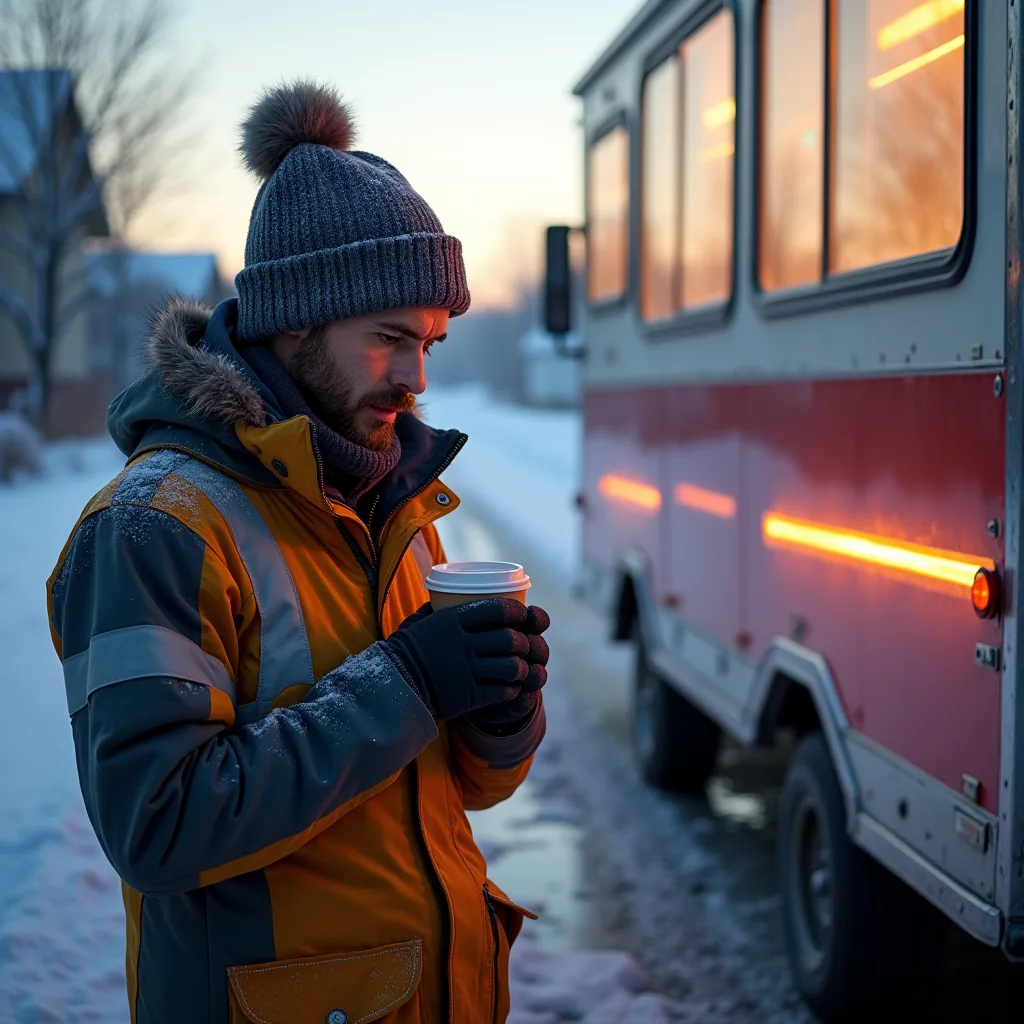
At what temperature must an employer stop outdoor work? No Quebec law sets that number, and that is exactly what surprises people. Rules do exist, though: a general duty to prevent risks, a CNESST occupational health program dated June 2026 with a precise break table, and a right to refuse. Here is what they require when you are working in cold weather, and what you can concretely ask for.
Why the law sets no outdoor temperature limit
The occupational health program on cold stress, published by the CNESST and Quebec's health ministry in June 2026, says it plainly: there is no regulatory provision specific to cold. The Regulation respecting occupational health and safety (RSST) does set minimum temperatures, but for the inside of establishments:
| Type of work (RSST Schedule IV) | Minimum temperature |
|---|---|
| Light seated work (reading, writing, precision) | 20 °C |
| Light physical seated work | 19 °C |
| Light standing work | 17 °C |
| Moderate standing work | 16 °C |
| Heavy standing work (heavy tools) | 12 °C |
For a garage or a warehouse, these thresholds apply. For a snow removal worker, a roofer or a flagger, the weather cannot be adjusted, so the law relies on a duty of result rather than a thermometer. Section 51 of the Act respecting occupational health and safety (LSST) requires the employer to take the necessary measures to protect workers' health and ensure their safety, including organizing work safely and identifying and controlling risks.
That is where the CNESST health program comes in. The employer must take it into account in its prevention program (LSST, s. 59) or action plan (s. 61.2). According to the document, the risk often appears below 18 °C, and an absence of complaints does not mean an absence of risk.
What the employer must put in place
The CNESST program ranks measures in order of priority. Personal equipment comes last, not first.
- Eliminate or limit exposure: move a task to a warmer time of day, for example doing exterior painting at noon rather than 7 a.m.
- Engineering controls: heated shelter or vehicle, wind screens, insulated metal handles and surfaces. Fuel-burning heaters must not be used in closed or poorly ventilated spaces, because of carbon monoxide.
- Administrative measures: a cold work plan, alternating work and warm-up periods, task rotation, warm non-alcoholic drinks, training and buddy monitoring, and a reliable means of communication for anyone working alone.
- Protective equipment and clothing suited to the task, as a last line of defence.
The LSST adds specific obligations. The employer must inform workers about the risks of their work and provide the necessary training and supervision (s. 51, para. 9). It must also provide free of charge the personal protective equipment chosen by the health and safety committee or set by regulation, and make sure it is used (s. 51, para. 11).
For workers who are pregnant or breastfeeding, the program notes that extreme cold may justify reassignment or preventive withdrawal under the Safe Maternity Experience program.
Warm-up breaks: the CNESST table
The heart of the program is a table based on wind chill, the "feels like" temperature in weather apps. Wind changes everything: according to the CNESST, at -30 °C with a 10 km/h wind, it feels like -39. The table sets the maximum period of active work in the cold before a 10-minute break in a heated place.
| Wind chill | Maximum work before a 10-min heated break | Buddy monitoring |
|---|---|---|
| -1 to -6 | Normal work | — |
| -7 to -27 | 120 minutes | After 30 minutes |
| -28 to -34 | 75 minutes | After 10 minutes |
| -35 to -37 | 55 minutes | After 10 minutes |
| -38 to -40 | 40 minutes | After 10 minutes |
| -41 to -43 | 30 minutes | After 5 minutes |
| -44 to -47 | 10 minutes | After 2 minutes |
| -48 to -54 | 5 minutes | After 2 minutes |
| -55 and below | Stay indoors, outdoor activities cancelled | — |
Three rules come with the table. Wind chill is checked every day and every 4 hours. After 4 hours of work in the cold, take a long break of at least 30 minutes in a heated place. And these durations only apply to active work in dry clothing: if you are nearly motionless, a flagger for example, the most restrictive column applies.
Example: a shovelling crew starts at 5 a.m. at -30 °C with a 10 km/h wind. Feels like: -39. The crew works no more than 40 minutes, takes 10 minutes in the heated truck, starts again, and stops for 30 minutes after 4 hours. Are these breaks paid? The Act respecting labour standards deems the employee to be at work during breaks granted by the employer (s. 57); only the meal period follows a separate rule. For the trade itself, see Snow removal worker in Quebec: pay, hours, licences and how to get hired.
Recognizing frostbite and hypothermia
Cold attacks the extremities first: fingers, toes, ears, cheeks and nose. That is why the table calls for buddy monitoring. The sign to watch for in a co-worker: numbness or whitening of the skin on the face or hands, or unusual behaviour.
| Level of hypothermia | Body temperature | Signs |
|---|---|---|
| Mild | 32 to 35 °C | Intense shivering, fast breathing and pulse, trouble speaking, confusion, clumsiness |
| Moderate | 28 to 32 °C | Slower pulse and breathing, altered consciousness; shivering stops around 30 °C |
| Severe | Below 28 °C | Coma, respiratory or cardiac arrest |
Watch out for the trap: someone who stops shivering is not getting better; they may be getting worse. First steps recommended by the CNESST:
- call 911 for moderate or severe hypothermia, and 811 (Info-Santé) in other cases;
- move the person somewhere warm, remove wet clothing, cover them, warm the trunk before the extremities;
- give warm, sweet drinks without alcohol or caffeine, and do not make them walk if hypothermia is moderate or severe;
- for frostbite: rewarm gradually, for example in lukewarm water at 37-39 °C, without rubbing and without re-exposing to cold.
Equipment to demand, and what to check before accepting
No regulation sets out a list of winter clothing specific to cold. What is clear is that required personal protective equipment must be provided free of charge (LSST, s. 51). For someone paid minimum wage, the Act respecting labour standards adds that materials and equipment required by the employer are also provided at no cost; details are in Minimum wage in Quebec: what it covers and what it does not.
The clothing the CNESST recommends relies on layers, not one big coat:
- an inner layer of wool or synthetic fabric that wicks moisture (no cotton);
- an insulating layer;
- a windproof, waterproof outer layer;
- gloves or mittens, a toque or insulated liner under the hard hat, a balaclava when the cold gets harsher;
- insulated, waterproof, slip-resistant boots, and spare clothes to stay dry.
Before accepting an outdoor job, ask three questions: where are heated breaks taken, what equipment is provided, and who monitors the weather. You can compare current job offers, including in snow removal. Employer? More hiring advice is on the employers page.
If you believe a task is dangerous: the right to refuse
Section 12 of the LSST allows a worker to refuse to perform work if they have reasonable grounds to believe that it exposes them, or another person, to a danger to their health, safety or physical or psychological integrity. Section 13 sets two limits: you cannot refuse if doing so puts another person's life or health in immediate danger, or if the conditions are normal for that type of work. Ordinary cold is part of a snow removal worker's job; going out with no shelter and no break at a wind chill of -45 is another question.
The process, according to the CNESST:
- Immediately notify your supervisor and explain why the task seems dangerous. Stay on site, available for other tasks.
- The employer, you and your representative look for a correction together.
- If no solution is found, a CNESST inspector decides whether the refusal is justified; the decision applies immediately and can be reviewed.
During this time, you are deemed to be at work (s. 14), and the employer cannot, except as provided, have the work done by someone else before the decision. Nor can the employer dismiss, suspend or transfer you for exercising this right (s. 30), unless it shows the right was used abusively. These protections cover employees; if you are self-employed, your situation is different, and Employee or self-employed? The criteria that matter in Quebec helps you figure out where you stand. For a specific case, consult the CNESST.
In short
- No temperature limit is set for outdoor work: the employer must prevent the risk (LSST, s. 51) and take the CNESST health program into account.
- The CNESST table links wind chill to a maximum period of active work, from 120 minutes (-7 to -27) to 5 minutes (-48 to -54), followed by a 10-minute heated break.
- After 4 hours in the cold: a break of at least 30 minutes somewhere warm.
- A co-worker whose skin whitens, who becomes confused or stops shivering needs help right away: 911 or 811.
- When there is real danger, the right to refuse exists; report it immediately, and the CNESST decides.
Frequently asked questions
At what temperature is outdoor work prohibited in Quebec?
No law sets a temperature limit for outdoor work. The CNESST health program does recommend staying indoors and cancelling outdoor activities from a wind chill of -55, and limiting work sharply well before that. The employer must take this program into account in its prevention efforts.
How many breaks do you need when working in the cold?
The CNESST table calls for a 10-minute break in a heated place after a period of active work that depends on wind chill, for example 75 minutes between -28 and -34. It adds a long break of at least 30 minutes somewhere warm after 4 hours of work in the cold.
Are warm-up breaks paid?
Under section 57 of the Act respecting labour standards, the employee is deemed to be at work during breaks granted by the employer. These breaks must therefore be paid. The meal period follows a separate rule.
Does the employer have to provide winter clothing?
No regulation sets out a clothing list specific to cold. The employer must provide required personal protective equipment free of charge and, for someone paid minimum wage, the materials it requires. For everything else, ask what is provided before accepting the job.
Can you refuse to work in the cold?
Yes, if you have reasonable grounds to believe the task exposes you to danger, but not if the conditions are normal for that type of work. Notify your supervisor immediately and stay available; a CNESST inspector decides if no solution is found.
Sources
- Programme de santé au travail – Contrainte thermique par le froid (CNESST, 06/2026)
- S-2.1 - Loi sur la santé et la sécurité du travail, article 51
- S-2.1 - Loi sur la santé et la sécurité du travail, article 12
- S-2.1 - Loi sur la santé et la sécurité du travail, article 13
- S-2.1 - Loi sur la santé et la sécurité du travail, article 14
- S-2.1 - Loi sur la santé et la sécurité du travail, article 30
- Right to refuse to perform a dangerous task
- N-1.1 - Loi sur les normes du travail, article 57