Electrician: career paths in construction, maintenance and residential
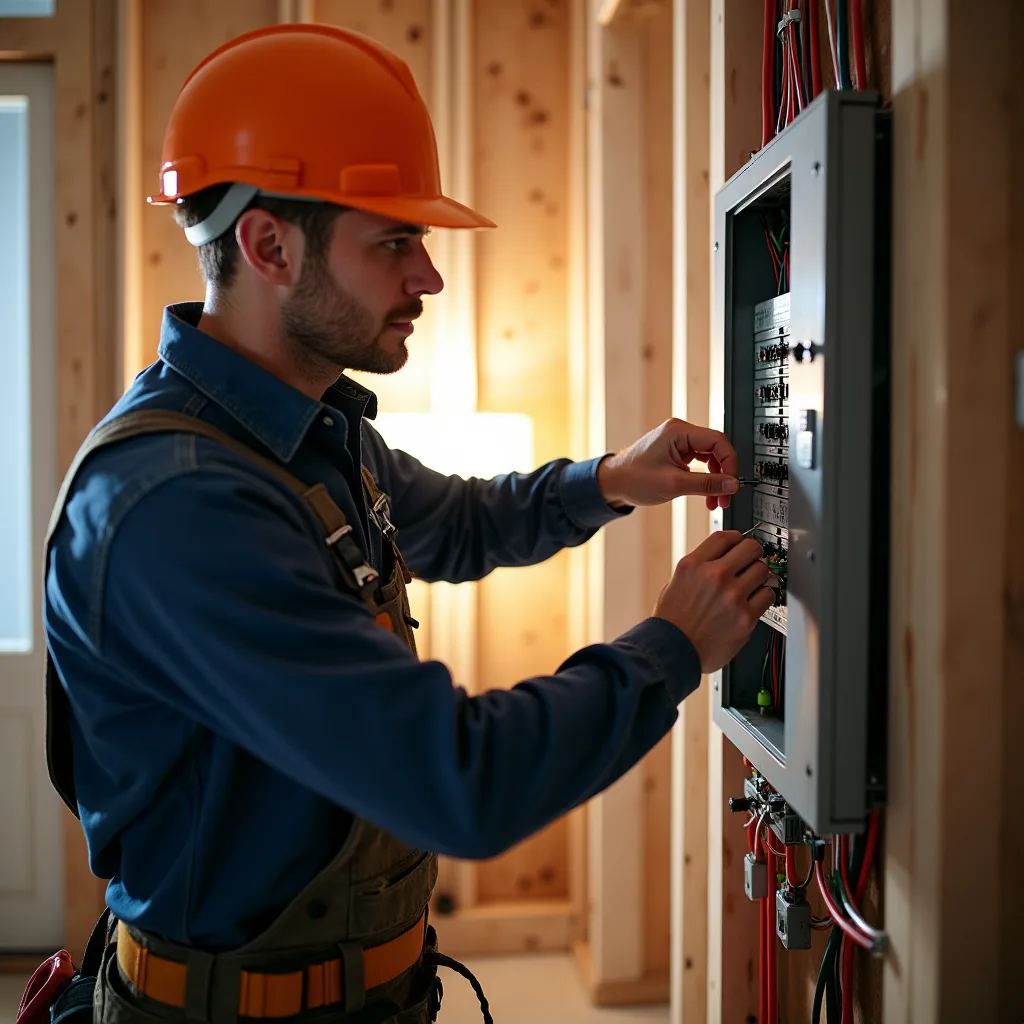
A journeyperson electrician earns $50.79 an hour in industrial, institutional and commercial work, but $47.85 in light residential, according to the August 2026 rates published by the CCQ. And someone who maintains a plant doesn't even need the construction card. Here are the three paths to become an electrician in Quebec, what each one requires and what it pays.
Three paths, three different frameworks
In Quebec, "electrician" does not refer to a single permit. The same trade is practised in three distinct frameworks, and each has its own entry rules. The reason is historical and legal: work on a construction site falls under the Commission de la construction du Québec (CCQ); electrical work outside construction, such as maintaining a plant or a building, requires a certificate issued under the Ministère de l'Emploi et de la Solidarité sociale; and a business that sells electrical work must hold a contractor's licence.
Before you sign up for anything, find yourself in this table. It can save you two years on a path that doesn't lead where you want to go.
| Path | Document required | Body | Apprenticeship length |
|---|---|---|---|
| Construction (job sites) | Apprentice competency certificate, then journeyperson | CCQ | 4 periods of 2,000 hours, or 8,000 hours |
| Maintenance (outside construction) | Certificate in electricity (CÉ) | Ministère de l'Emploi et de la Solidarité sociale | At least 5,000 hours |
| Self-employed (business) | Contractor's licence, subclass 16 | Régie du bâtiment du Québec (RBQ), qualification through the CMEQ | On top of trade competency |
The way in: the DEP in electricity
For construction, the main path is the vocational diploma (DEP) Électricité (5295) or Electricity (5795), which takes 1,800 hours. According to the CCQ trade sheet, the program is offered in 16 regions, including the Laurentides, Laval, Montréal, Montérégie and Capitale-Nationale, and some cohorts are offered as paid work-study.
Admission requirements depend on your situation: a minimum age, Secondary III or IV credits in language of instruction, second language and math, functional prerequisites, or a high school diploma or higher. The vocational training centre confirms whether you are eligible.
What the CCQ looks for in candidates is concrete: enjoying calculations and reading plans, being able to interpret codes and troubleshoot faults, working in tight spaces, good physical condition and good colour perception. If coloured wires blur together for you, check that before you enrol.
Construction path: from apprentice to journeyperson
Once you pass the DEP, you show it to the CCQ to get your apprentice competency certificate. You then need four apprenticeship periods of 2,000 hours, or 8,000 hours, before you can take the provincial qualification exam. Passing it earns the journeyperson competency certificate. The CCQ notes that other access routes exist, including during studies.
Pay follows that progression, and it also depends on the sector. Here are the hourly rates from the collective agreements published by the CCQ (August 2026):
| Level | Civil engineering and roads | Industrial, institutional and commercial | Light residential |
|---|---|---|---|
| Apprentice, 1st period | $25.44 | $25.40 | $23.93 |
| Apprentice, 2nd period | $30.52 | $30.47 | $28.72 |
| Apprentice, 3rd period | $35.61 | $35.55 | $33.50 |
| Apprentice, 4th period | $43.24 | $43.17 | $40.68 |
| Journeyperson | $50.87 | $50.79 | $47.85 |
Over a year, the CCQ reports an average annual salary in 2025 of $44,376 for apprentices and $80,479 for journeypersons, and $93,788 for journeypersons who worked at least 500 hours. These averages include bonuses, overtime and the leave indemnities set by the agreements. The gap between the two journeyperson figures reflects a job-site reality: annual income depends on the hours you get, not just on the rate.
Where is the work? In 2025, according to the CCQ, 67% of electricians' hours were in institutional and commercial, 19% in industrial, 8% in residential and 6% in civil engineering and roads. The Laval-Laurentides-Lanaudière region had the most active electricians (6,060), ahead of Montérégie (5,329). One scheduling detail to know: the agreements set a mandatory winter vacation, from December 20, 2026, to January 2, 2027, according to the CCQ.
Maintenance path: the certificate in electricity (CÉ)
Maintaining the electrical installation of a plant, a hospital, a shopping centre or a building portfolio is not construction under the law. Anyone who installs, maintains, repairs, rebuilds or modifies an electrical installation outside the construction field must instead hold the certificate in electricity (CÉ), with a few exclusions (mines, factory-built buildings, electric railways and subways).
- Register in the electricity apprenticeship program and get an apprentice card, renewed every year.
- Complete at least 5,000 hours of apprenticeship under the supervision of a certified worker.
- Take the mandatory training: reading plans and diagrams, electricity basics, occupational health and safety, three-phase transformers.
- Pass the qualification exam: written, multiple choice, 3 hours, 40 to 60 questions, 60% pass mark.
- Renew the certificate, which is valid for four years.
The two paths connect: holders of a CCQ journeyperson electrician certificate, or a certificate with the Red Seal endorsement, can have their skills recognized and obtain the CÉ without starting over. On pay, maintenance is not governed by the construction agreements. The Government of Canada's Job Bank publishes, for plant maintenance electricians in Quebec (NOC 72201), hourly wages of $24.80 (low), $43.00 (median) and $48.00 (high), based on 2023-2024 data updated in November 2025. In the Laurentides, the range is $24.00 to $46.09, with the same $43.00 median.
Residential path: employee or contractor
Residential work attracts many young electricians: new homes, renovations, adding an EV charger or a heat pump. On job sites it is part of construction and follows the "light residential" rates in the table above, a little lower than in industrial, institutional and commercial ($47.85 versus $50.79 for a journeyperson). In return, sites are often closer to home and tasks more varied. It only accounted for 8% of electricians' hours in 2025, though, according to the CCQ.
Many then aim to go out on their own. To do electrical installation work as a business, you need a contractor's licence that includes subclass 16, Electrical contractor. For that subclass, the RBQ refers you to the Corporation des maîtres électriciens du Québec (CMEQ), which acts as the government's mandatary and qualifies its members. Being a journeyperson is therefore not enough to sell work to clients: you need the licence, on top of the obligations of any business.
If you go out on your own, your tax and legal status changes; Employee or self-employed? The criteria that matter in Quebec explains what really separates an employee from a self-employed worker. To compare with another licensed construction trade, see also Roofer: working at heights, licences and pay.
Choosing your path, then making it visible
Three questions help you decide. Do you want varied job sites and pay set by collective agreements? Construction is the most structured path. Do you prefer a stable workplace and more regular hours? Maintenance, with the CÉ, leads to jobs in plants or property management. Do you want to build your own client base? Residential is often the springboard, followed by the contractor's licence.
Either way, your cards are your best argument. On GPP Emploi, the Passport section of your profile groups your cards and licences; our team checks licences against the public register, and then a badge appears. Some construction work requires a verified RBQ licence to bid. Check the jobs and requests on the electrical page, and create your free profile in about 3 minutes, no résumé needed. Electrical contractor? Turn on "Des contrats à mon compte" and answer requests for quotes.
And if you haven't started your training yet, nothing stops you from working this winter in a seasonal trade that hires without a diploma, such as snow removal: Snow removal worker in Quebec: pay, hours, licences and how to get hired.
In short
- Construction: 1,800-hour DEP in electricity, apprentice certificate, then 8,000 hours of apprenticeship and a provincial exam to become a journeyperson (CCQ).
- August 2026 rates: from $23.93 (1st-period apprentice, light residential) to $50.87 (journeyperson, civil engineering and roads).
- Maintenance outside construction: certificate in electricity (CÉ), at least 5,000 hours, an exam and renewal every four years.
- Self-employed: contractor's licence with subclass 16, qualification through the CMEQ.
- Annual income depends as much on the hours you get as on the hourly rate.
Frequently asked questions
How long does it take to become an electrician in Quebec?
In construction, count on the 1,800-hour DEP, then four apprenticeship periods of 2,000 hours, or 8,000 hours, before the journeyperson exam. Outside construction, the certificate in electricity requires at least 5,000 hours of apprenticeship and an exam.
How much does a journeyperson electrician earn in 2026?
According to the collective agreement rates published by the CCQ (August 2026), a journeyperson earns $50.87 an hour in civil engineering and roads, $50.79 in industrial, institutional and commercial, and $47.85 in light residential. Annual income depends on the number of hours worked.
Can you become an electrician without a DEP?
The CCQ says there are access routes other than the DEP to obtain the apprentice certificate, but the DEP remains the main path. Outside construction, the certificate in electricity goes through an apprenticeship program of at least 5,000 supervised hours.
What licence do you need to be an electrical contractor?
You need a contractor's licence that includes subclass 16, Electrical contractor. The RBQ refers you to the Corporation des maîtres électriciens du Québec (CMEQ), which qualifies its members as the government's mandatary.
What is the difference between a CCQ card and the certificate in electricity?
The CCQ card covers work on construction sites. The certificate in electricity (CÉ), under the Ministère de l'Emploi et de la Solidarité sociale, covers electrical work outside construction, such as maintenance. A CCQ journeyperson can have their skills recognized to obtain the CÉ.
Sources
- Électricien / Électricienne - Fiche métier (Commission de la construction du Québec, carriereenconstruction.com, 2026)
- Certificat en électricité (CÉ) | Gouvernement du Québec
- Licence - Régie du bâtiment du Québec
- Électricien/électricienne d'entretien d'usines au Québec | Salaires - Guichet-Emplois
- Congés et vacances de la construction