Smart snow removal: sensors, GPS and weather forecasts
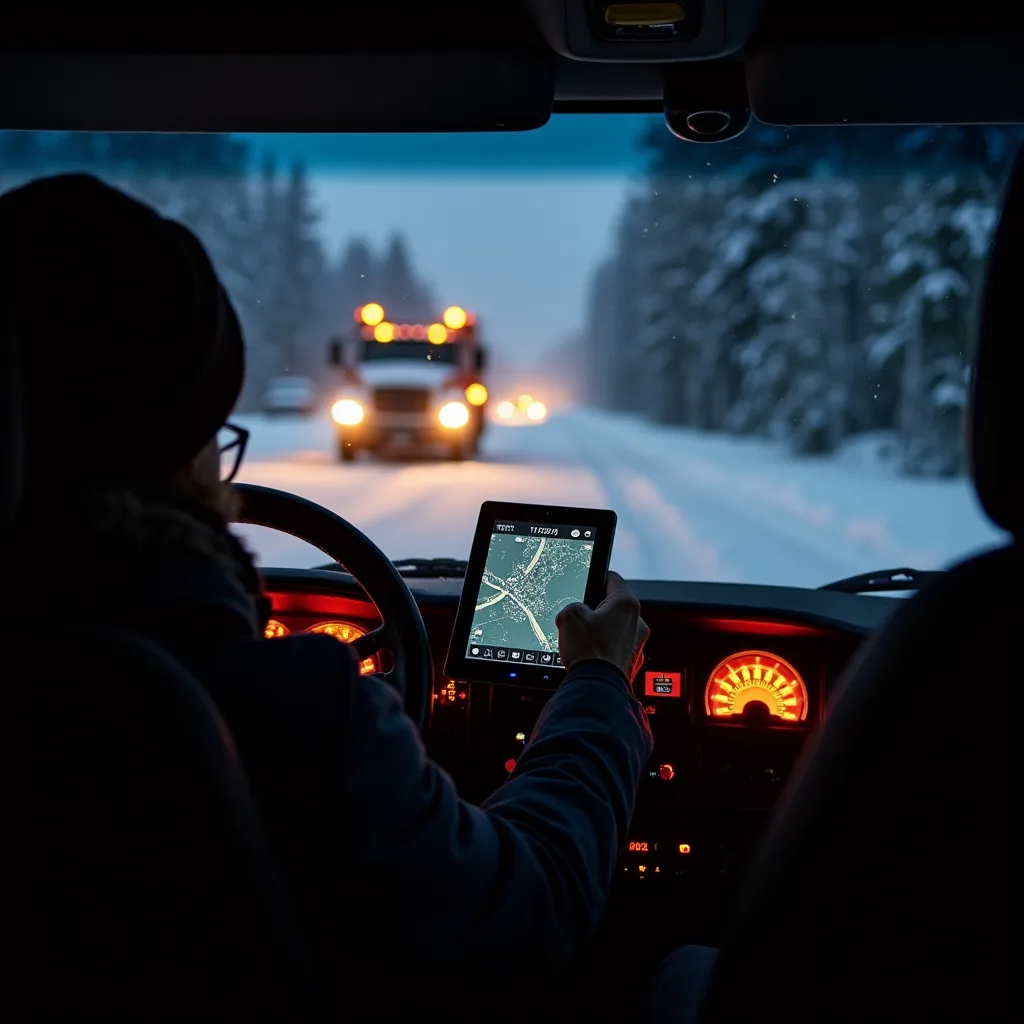
Two companies get the same storm: why does one send out its trucks two hours before the other, and with less salt? The difference increasingly comes down to data: impact-based forecasts, GPS vehicle tracking, temperature sensors and spreading logs. Here is what these technologies really do, the rules around them (road salt, privacy, licences) and what they change for operators.
Three technologies, one question: when to head out?
In snow removal, snow is not the only cost. What really matters is timing: head out too early and you pay for truck hours that go over the same ground twice; head out too late and you get blocked driveways, calling clients and salt spread on ice that has already formed. The sector's digital tools all aim to answer that question better.
| Technology | What it measures | Decision it informs |
|---|---|---|
| Weather forecasts and alerts | Type of precipitation, amounts, expected impact | When to call in crews, how many vehicles |
| GPS vehicle tracking | Position, route, time of service | Route order, nearest vehicle, proof of service |
| On-board sensors | Air and pavement temperature, amount spread | How much salt or abrasive, and where |
None of these technologies clears snow for you. Their value comes from the data they produce, and above all from what you do with it: a GPS-tracked truck whose routes nobody looks at only costs a subscription. It is the same lesson as for artificial intelligence in general, detailed in Will AI replace the service trades? What is really changing: the tool changes the tasks, not the need for skilled people.
Forecasts: reading a colour-coded alert, not just a number
Environment and Climate Change Canada has overhauled its weather alert system. Warnings, advisories and watches now carry a colour that shows the level of risk, and impact guides replace the old fixed criteria to decide that colour.
| Colour | What Environment Canada says | Frequency |
|---|---|---|
| Yellow | Hazardous conditions that could cause damage, disruption or health impacts; moderate, localized or short-lived impacts | Most common |
| Orange | Severe conditions that will likely cause significant damage; major, widespread impacts that may last a few days | Uncommon |
| Red | Very dangerous, potentially life-threatening conditions; considerable, widespread and long-lasting impacts | Rare |
For snow, the impact guides describe rising levels: travel disruption and injuries from exertion at the moderate level; dangerous travel, long delays and a higher risk of roof collapse at the high level; impossible travel and snowbound residents at the extreme level. Why this helps a dispatcher: the alert talks about impact, not just centimetres. Fifteen centimetres of light snow and ten centimetres of wet snow followed by freezing rain do not call for the same organization.
A simple way to use it: tie each level to a decision written in advance: who is on call, when operators are called in, which contracts go first. The advantage of such a plan is not technological; it avoids improvising at 3 a.m.
GPS: planning routes and proving the service
GPS tracking solves two everyday problems. The first is route order. When a storm drags on, the dispatcher sees where vehicles are and can send the nearest one to an emergency (a store about to open, a paramedic's driveway) instead of guessing. The second is proof. A recorded time of service answers the client who calls to say "nobody came".
Sample calculation (hypothetical figures, to show the logic): a route of 40 residential driveways, cleared 5 times during a storm. If a better sequence saves 8 minutes per round, that is 40 minutes per storm for a single vehicle. Over 15 storms, 10 hours of truck and operator time. The real gain depends on each company; what matters is measuring it before and after.
GPS has its limits too. It tells you where the truck is, not whether the job was done well; it replaces neither the inspection round nor the operator's judgment in front of a poorly cleared driveway. And it raises a privacy issue for employees, covered below.
Salt: measuring to use less, in the right place
Salt is expensive and harms the environment, which is why the federal government published a Code of Practice for the Environmental Management of Road Salts. It targets organizations that use more than 500 tonnes of road salt per year (5-year moving average) or that have vulnerable areas in their territory. A company holding a concession to maintain a public road can be included; domestic, private and institutional uses are excluded.
Most private contractors are therefore not subject to it, but the Code is still a good model. It calls for a salt management plan that includes, among other things:
- a training program for staff who carry out winter maintenance;
- storage practices (covered storage, drainage management);
- for spreading, aiming for the right amount of salt in the right place at the right time, using current technology and weather information systems;
- records kept for 7 years and an annual review of the plan.
This is where sensors come in. A spreader whose output is set and checked, a pavement temperature reading and a log of quantities per site and per storm tell you what each contract really costs. That data then helps you set next season's prices instead of estimating.
What it changes for operators
For operators, the workday changes less than you might think: you still drive, still clear snow, and experience in front of a tricky driveway still matters just as much. What gets added are digital steps: following a route on a tablet, confirming a visit, reporting a breakdown or an obstacle. These tasks are simple, but they are becoming a hiring criterion. The job's requirements are detailed in Snow blower or loader operator: training, cards and pay.
Licences, on the other hand, do not change. According to the SAAQ, a Class 5 licence lets you drive a work vehicle such as a loader or a grader; Class 3 is required for a 2-axle truck with a net mass of 4,500 kg or more, and for trucks with 3 or more axles.
Then there is privacy. A truck's GPS also locates the person driving it. In Quebec, the Act respecting the protection of personal information in the private sector requires a business to inform people, when it collects information, of the purposes and the means used. When it collects information using a technology that can locate a person, it must first inform them that the technology is being used and of the means available to activate that function. As an operator, you can therefore ask what is collected, why, who can access it and how long it is kept. For a specific case, the Commission d'accès à l'information (Quebec's access to information commission) is the body to consult.
For employers: where to start
You do not need to equip everything at once. The logical order goes from least to most expensive:
- starting this winter, keep a simple log for each storm: departure time, operator hours, salt quantity per site;
- follow Environment Canada alerts and write down what each colour triggers in your business;
- before installing GPS, draft a clear policy for your employees: what is collected, for what purposes, for how long;
- train operators on the new tools on quiet days, not during the first storm;
- only then compare tracking and sensor solutions, with your own numbers in hand.
Technology does not solve the labour shortage. When your business receives more requests than usual in GPP Central, the GPP Emploi Central signal immediately shows you the workers available near you. The trade is presented on the snow removal page, and tips for recruiting before the snow are in Hiring for winter: recruiting snow removal crews before the first storm and on the employers page. An operator? Your free profile takes about 3 minutes, no resume needed.
In short
- Forecasts, GPS and sensors all help you decide earlier and better: when to head out, in what order, with how much salt.
- Environment Canada alerts are now yellow, orange or red based on expected impact; tie each colour to a decision written in advance.
- The road salt Code of Practice targets organizations using more than 500 tonnes a year, but its practices (training, storage, records) are useful to any business.
- GPS also locates the operator: the business must inform them of the technology used, the purposes and the means to activate the function.
- Start by measuring with a simple log; the equipment comes after.
Frequently asked questions
How do snow removal companies use GPS?
Mostly to see where vehicles are during a storm, send the nearest one to an emergency and record the time of service at each client. That proof of service helps answer complaints. GPS does not tell you whether the job was done well; a check is still needed.
Can my employer track me by GPS in the snow removal truck?
Quebec's private-sector privacy law governs this collection. The business must inform you of the purposes and means of the collection and, before using a technology that can locate you, inform you that it is being used and of the means to activate that function. For a specific case, consult the Commission d'accès à l'information.
What do yellow, orange and red weather alerts mean?
Environment and Climate Change Canada gives its warnings, advisories and watches a colour based on expected impact. Yellow, the most common, signals moderate or localized impacts; orange, likely significant damage; red, which is rare, very dangerous and potentially life-threatening conditions.
What licence do I need to drive a loader or a snow removal truck?
According to the SAAQ, a Class 5 licence lets you drive a work vehicle such as a loader or a grader. A 2-axle truck with a net mass of 4,500 kg or more, or a truck with 3 or more axles, requires Class 3.
What is the Code of Practice for road salts?
It is a federal code that asks organizations using more than 500 tonnes of road salt a year, or with vulnerable areas, to adopt a salt management plan. The plan covers training, storage, spreading at the right time and place, and record keeping.