The trades clients requested most in December
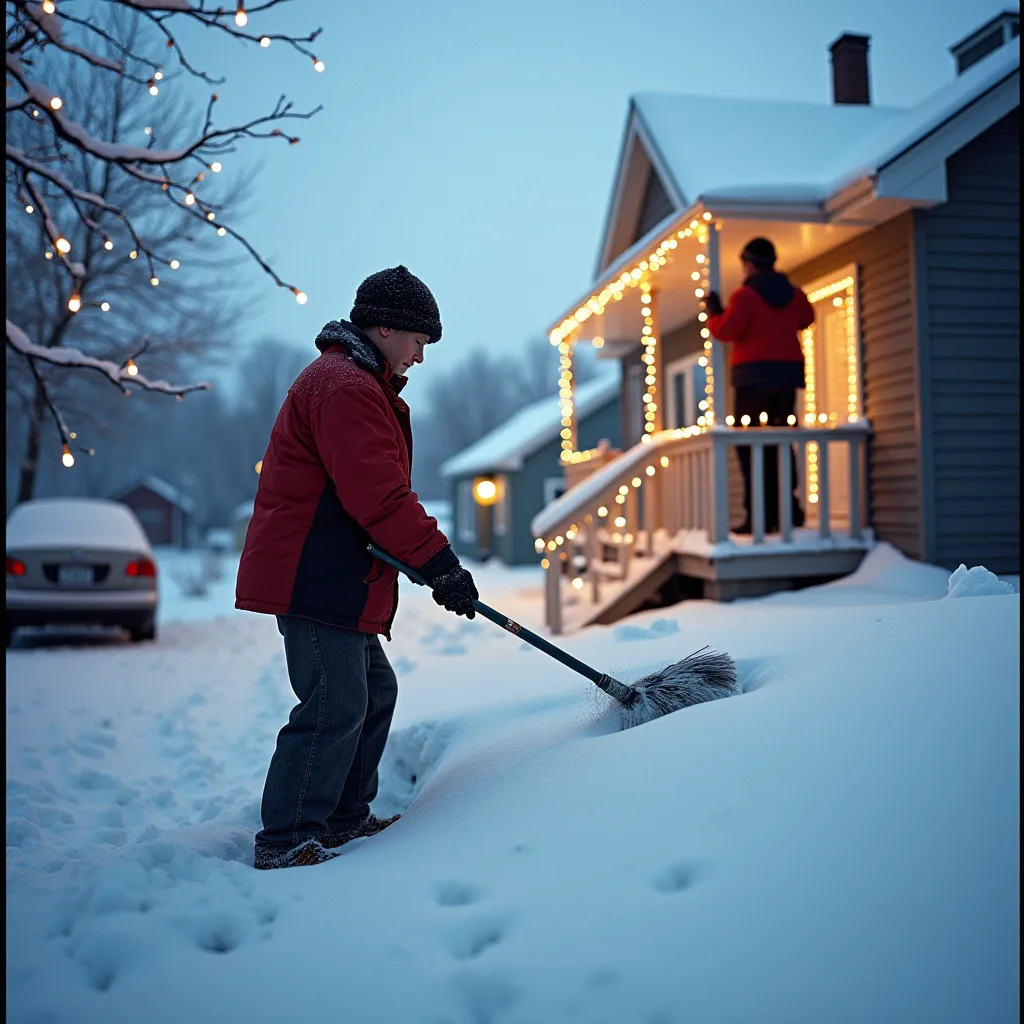
In December, is it mostly snow removal contractors that clients call? Not only. That month, three forces overlap: snow settling in, heating running at full capacity and the holidays approaching. Here are the most requested trades in December that these three forces push up, why, based on public sources, and how to follow your region's actual ranking live rather than a fixed list.
Why a fixed ranking is not enough
A province-wide ranking of the "most requested trades" has a flaw: it comes too late and it hides the differences. In December, the first real snowstorm can hit the Laurentians a week before Montréal. A cold snap makes heating technicians' phones ring everywhere at once. And the week before Christmas has nothing in common with the week after. The ranking therefore changes by region and by week.
That is why GPP Emploi does not publish a fixed ranking. The home page shows live, in the section "Ce que personne d'autre ne voit" (what no one else sees), the service requests taken by trade and by region in GPP Central, the platform that brings clients to businesses. GPP Emploi is its counterpart: it brings them employees and self-employed workers, in 96 trades and all 17 regions of Québec. For the actual ranking in your region, look at the home page.
What this article can do is explain the three forces that shape demand in December (snow, heating and the holidays), based on public sources. Understanding the "why" will help you read the live signal and get in position before others. The overview of the whole season, from November to March, is in Winter jobs in Quebec: the trades hiring from November to March.
Snow: snow removal, roofs and equipment operators
Residential snow removal contracts are mostly signed in the fall, but December brings a different kind of demand: clients who did not find a contractor in time, businesses that want a pass before opening, and companies that need to replace a worker mid-season. Snowblower and loader operators, sidewalk shovellers and equipment drivers are all in demand at the same time. Job postings in this field are grouped on the snow removal page.
Roof snow removal follows a different logic: it depends on accumulation, and it requires real know-how. The CNESST points out that workers must be protected against falls as soon as they are exposed to a height of more than 3 metres. It recommends:
- planning the work and marking off the area where snow falls to keep people out;
- clearing a sloped roof from the ground, with a roof rake, whenever possible;
- using a guardrail or an aerial work platform, or otherwise a harness connected to a suitable anchor;
- clearing from the top down, so a mass of snow does not slide and bury someone.
In its reminder published on Québec.ca, the CNESST specifies that the harness must be paired with a lanyard of no more than 1.8 m, an energy absorber, an anchor of at least 18 kN and a rescue plan. These requirements partly explain why clients call trained crews: a worker who knows these rules and has the equipment has a clear advantage.
Heating: heat pumps, heating systems and chimney sweeping
December marks the start of the period when heating is under the most strain. Hydro-Québec, for example, defines a winter period for its Rate Flex D running from December 1 to March 31, with possible peak events from 6 a.m. to 10 a.m. and from 4 p.m. to 8 p.m., for a maximum of 120 hours per winter. A heat pump that fails or a water heater that quits at that point cannot wait until spring: the client wants someone the same day.
The trades involved:
| Trade | Why demand rises in December |
|---|---|
| Heat pumps and air conditioning | Breakdowns and adjustments when units run at full capacity |
| Heating and water heaters | Equipment failures and the need for fast repairs |
| Chimneys and sweeping | Postponed inspections and the first fires of the season |
| Ventilation and air exchangers | Closed-up homes, condensation and air quality |
For chimney sweeping, Québec.ca recommends having the chimney swept by a professional at least once a year, ideally in the spring, and having the system inspected every year, preferably before the heating season. Homeowners who put off that inspection end up looking for a chimney sweep just when everyone is heating. Chimney-cleaning logs or products only remove part of the creosote and never replace a professional sweep.
The holidays: cleaning, catering, events and delivery
The third force is social. Before hosting, clients want a home that is ready: residential cleaning, carpet and upholstery cleaning, indoor window washing. Businesses hold their office parties and prepare their premises for holiday customers, which calls for commercial cleaning, caterers, private chefs, entertainers and event services.
Transportation follows the same pattern: deliveries, year-end moves and freight transport. These needs are often one-off, which opens the door to temporary jobs or short contracts for self-employed workers.
If you are looking for this kind of assignment, check the conditions before accepting: actual duration, schedule on December 24, 25 and 31 and January 1, and how you will be paid. The list of things to check is in Holiday temp jobs: where to look and what to check before saying yes.
Working in December: statutory holidays, snow removal contracts and the cold
A busy month is not judged only by the number of calls. For employees and self-employed workers alike, December comes with specific rules, and knowing them avoids bad surprises on your pay or with a client.
Statutory holidays: only two in the period
Section 60 of the Act respecting labour standards lists the statutory holidays. During the holiday season, there are only two: December 25 and January 1. December 24, 26 and 31 and January 2 are not statutory holidays under the Act, unless your contract or a collective agreement grants them.
For each statutory holiday, section 62 provides for an indemnity equal to 1/20 of the wages earned during the four complete pay weeks before the week of the holiday, not counting overtime. Sample calculation: a snow removal operator who earned $4,400 in regular wages during those four weeks receives $220 for December 25. And if a storm means working that day, section 63 requires the employer to pay for the work done and pay the indemnity, or grant one day of compensatory leave to be taken within the three weeks before or after the holiday. The details, including special cases, are in Christmas and New Year's Day: who gets paid for statutory holidays, and how much?.
Last-minute snow removal clients
A client looking for a snow removal company in December is often in a hurry, and that is exactly the moment to offer a clear contract. The Office de la protection du consommateur recommends that consumers get a written contract that states the duration, the amount of snow that triggers clearing, the deadline, where the snow will be piled, related tasks (de-icing, door access) and the total price and payment terms. It also advises paying no deposit, or a very small one, before service begins.
Two rules apply directly to the contractor. A business that solicits clients away from its place of business, door to door for example, is an itinerant merchant: it needs a licence from the Office, the client can cancel its contract within 10 days, and it can neither request nor accept a deposit during that period. And for an agreement made by phone or online, the written contract must be sent to the client within 15 days. A self-employed worker who hands over a complete contract from the start stands out: how to build a solid offer is explained in Writing a winning quote: template and mistakes to avoid.
Finally, the cold changes the workday: warm-up breaks, clothing, signs of frostbite. Everyone's rights and obligations are covered in Working in the cold: rights, breaks and equipment to demand. Do it now: mark December 25 and January 1 in your schedule and check with your employer who is working on those days.
What slows down, and how to make up for it
December is not good for every trade. Work that depends on the ground and good weather slows down: lawn and yard maintenance, sod, excavation, concrete, asphalt and paving stones, exterior painting and siding. The same goes for roof replacement, which is often postponed until spring.
Demand does not disappear, though; it moves indoors. Interior painting, plastering, tiling, flooring and bathroom renovation often benefit from winter; the reasons are detailed in Indoor renovation in winter: why demand climbs. For a worker, the strategy is to add a second trade to your profile: a landscaper who operates machinery can aim for snow removal, and an exterior painter for interior finishing.
Switching from one trade to another is something you prepare before the slow period. Browse the list of trades to spot those that match your skills and cards, then add them to your profile as early as November.
How to use the live signal
Knowing which trades are rising is useless if you show up after everyone else. GPP Emploi offers tools to react quickly, depending on your profile:
| You are… | What you can do |
|---|---|
| A worker | Set your email alerts (immediately, daily or weekly digest) and text alerts for matches of 85% or more; turn on "Disponible maintenant" (available now) to move to the top of employers' lists for 48 hours. |
| Self-employed | Turn on "Des contrats à mon compte" (contracts on my own account) and answer quote requests with a price; open a public storefront and get your own clients through GPP Central, with the same account. |
| An employer | Turn on the Central signal (optional): when your business takes more requests than usual in GPP Central, you are immediately shown available workers near you. In the profile bank, the "dispo maintenant" filter highlights those who can start right away. |
Text messages are never sent at night, and the alert threshold can be set from 50% to 90%. In December, a slightly lower threshold may be worth it for a few weeks if you want to see more opportunities.
In short
- In December, three forces drive demand up: snow, heating and the holidays.
- Snow removal, roof snow removal, heating, heat pumps, chimney sweeping, cleaning and events benefit; outdoor work slows down and interior renovation takes over.
- Roof snow removal requires fall protection above 3 metres: training and equipment make the difference.
- Only December 25 and January 1 are statutory holidays under the Act; in snow removal, a complete written contract reassures a client in a hurry.
- The actual ranking varies by region and by week: check the live signal on the home page rather than a fixed list.
Frequently asked questions
Which trades are most in demand in winter in Québec?
Snow removal, roof snow removal, heating, heat pumps and chimney sweeping are driven by the cold season, and interior renovation often takes over from outdoor work. The exact ranking varies by region and by week; the GPP Emploi home page shows requests taken live.
When should I have my chimney swept?
Québec.ca recommends having it swept by a professional at least once a year, ideally in the spring, plus a yearly inspection, preferably before the heating season. Also check your municipality's rules.
Do you need a harness to clear snow from a roof?
For a worker, the CNESST requires fall protection as soon as they are exposed to a height of more than 3 metres: a guardrail, an aerial work platform or, failing that, a harness connected to a suitable anchor. On a sloped roof, a roof rake used from the ground is preferred.
Are holiday jobs only temporary?
Many are one-off, such as catering, events or cleaning before parties. But a holiday assignment done well can lead to a regular client or a permanent position, especially in residential and commercial cleaning.